The easy keeper's diet: managing the horse who lives on air
Some horses get fat looking at a pasture. Managing them isn't cruelty — it's the kindest thing you can do, because the alternative is laminitis.
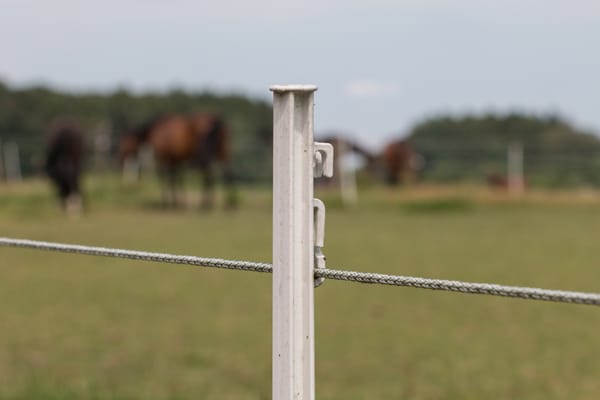
Pippin is a 14.2 Welsh cross whose owner swears he gains weight off the smell of grain. She's not far wrong. Easy keepers — many ponies, draft crosses, Morgans, mustangs, and a lot of Quarter Horses — descend from animals that survived hard country by wringing every calorie out of sparse forage. Drop that metabolism onto a Kentucky spring pasture and a well-meaning owner's grain scoop, and you get an obese, cresty, laminitis-primed horse who looks, to the untrained eye, "just a little chunky."
The reason this matters beyond appearance is that equine obesity isn't cosmetic. Excess fat, especially the hard, cresty kind, is metabolically active tissue that drives insulin dysregulation. High insulin is the direct trigger for endocrinopathic laminitis, the most common cause of laminitis we see now. An easy keeper who founders on grass didn't have bad luck; he had a missed warning. Learning to read that warning is exactly why we push every owner to master body condition scoring and score monthly with their hands.
The good news is the management is straightforward, if not always popular. Start with forage, because cutting hay too far is the classic mistake. Never drop below about 1.5 percent of ideal body weight in forage — starving the gut causes ulcers, hyperlipemia, and a horse so frantic he wrecks fences. Instead, change the kind of hay and how it's delivered. Choose a mature, stemmy grass hay that's high in fiber and low in calories, and ideally test it so you know the non-structural carbohydrate content is under about 10 to 12 percent. Soaking hay for 30 to 60 minutes leaches out a meaningful chunk of sugar; dump the soak water, which is now sugary, away from the horse.
Then slow it down. A flake thrown on the ground vanishes in forty minutes and leaves the horse standing empty and bored for hours. A small-hole hay net, double-netted for the truly piggish, stretches the same poundage across most of the day, which keeps the gut working and the horse sane. We've watched a 1.5-percent ration that disappeared by mid-morning become an all-day occupation just by changing the delivery, with no change in calories.
Grass is the wild card. Pasture in spring and fall, especially sunny afternoons after cool nights, can spike to sugar levels that no easy keeper should eat freely. A grazing muzzle, despite the dirty looks it earns you, can cut intake by 30 to 80 percent while still letting the horse move, socialize, and graze — far better for body and mind than a dry lot with a flake. Use a dry lot or limited turnout during high-risk grass windows, and reintroduce grazing gradually. For horses who've already shown metabolic or laminitic signs, the rules get stricter, and we lay them out in feeding the laminitis-prone horse.
The feed bucket is where owners sabotage themselves. An easy keeper does not need a calorie-dense concentrate — full stop. What he does need is the vitamins, minerals, and quality protein that hay alone doesn't fully supply, and that's exactly what a ration balancer delivers in a one-to-two-pound serving with minimal calories. Feed the balancer, skip the sweet feed, and resist the urge to add a scoop of grain "so he doesn't feel left out" at feeding time. Horses don't do envy; they do insulin.
Exercise is the multiplier. Movement improves insulin sensitivity directly, independent of weight loss, so even a metabolically challenged horse benefits from consistent work. For a sound easy keeper, that means real, regular exercise — not a hand-walk twice a week. For one recovering from laminitis, every step is on the vet's terms.
Set a target and track it. Decide on the ideal body condition score, weigh or tape the horse monthly, and adjust in small steps; aim for slow, steady loss of a half to one condition score over a couple of months, not a crash. Pippin came down from a 7.5 to a solid 5 over a single summer on a muzzle, soaked hay in a net, a ration balancer, and four rides a week. His owner thought she was depriving him. His pasterns and his insulin numbers said otherwise. Managing the air-fern horse feels mean right up until the year your barn doesn't have a laminitis case.