Caring for the broodmare through eleven long months
Most of a mare's pregnancy is gloriously uneventful. The trick is knowing the few dates that genuinely matter and not over-managing the rest.
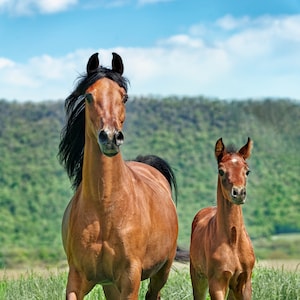
A mare carries for about 340 days, give or take a couple of weeks, and the honest truth is that most of that time she needs less fussing than her owner wants to give. The art of broodmare management is doing the right small things at the right moments and otherwise letting a healthy pregnant horse be a horse. When Willow, a Hanoverian mare, got pregnant on her first cycle, her owner wanted to wrap her in cotton wool. What Willow actually needed was turnout, good forage, and four or five appointments spread across the better part of a year.
The first one of those is confirmation. We ultrasound at 14 to 16 days post-ovulation, mostly to catch twins. Equine twins are a genuine emergency in slow motion — mares rarely carry both to term, and the usual outcome without intervention is abortion of both, often late. When we find two vesicles before they fix in place, we pinch one and keep the other. That single early scan prevents the worst heartbreak in this whole business. We then recheck around 25 to 30 days for a heartbeat, and again near 45 and 60 to confirm she's holding.
Vaccination timing is the part people most often get wrong. The headline is equine herpesvirus, EHV-1, the strain that causes abortion. Pregnant mares get a killed EHV-1 vaccine (the products labeled for it) at five, seven, and nine months of gestation, like clockwork. Skipping a dose because she "seems fine" is how barns end up with an abortion storm. Then, four to six weeks before her due date, she gets her pre-foaling boosters — typically rabies, tetanus, EWT, West Nile, and the rest of her core program — so that her colostrum is loaded with the antibodies the foal will drink in its first hours. That timing is the whole point; the foal is born with essentially no immunity and gets it all from that first milk.
Feeding is its own subject and worth reading in depth, because the textbook line that a mare's nutritional needs barely change until the last trimester is true and constantly ignored. For the first seven or eight months, a mare in good flesh on quality forage usually doesn't need a heaping scoop of anything. It's the final ninety days, when the foal does most of its growing, that her requirements climb. We'd point you to the specifics on feeding the pregnant and lactating mare rather than guess, because overfeeding early does more harm than good and a fat mare is a harder foaling.
Keep her moving. A pregnant mare should stay in normal turnout with a compatible group right up until late gestation, and a fit broodmare foals more easily than a soft one. You can keep riding a sound mare lightly into mid-pregnancy if she's used to work; just back off the intensity and use common sense as she gets bigger. What you want to avoid is dramatic change near the end — a new herd, a long haul, a sudden feed switch — because stress in late pregnancy is a real abortion risk.
The Caslick's question comes up for mares with poor vulvar conformation: a stitched Caslick's keeps air and contamination out of the reproductive tract, but it absolutely must be opened (an "episiotomy" or simply "cutting the Caslick's") before foaling. Make it a standing rule — write the open date on the calendar the day the Caslick's goes in, because a mare trying to foal through a Caslick's is an emergency you created yourself.
As you come into the last month, the management tightens up. Deworm her around foaling per your vet's protocol, get her into the foaling stall or a clean, grassy foaling paddock so she builds antibodies to her own environment, and start watching the udder. This is when you transition from broodmare care into foal watch, and you'll want to already know the foaling signs to read and the kit to prepare before her milk comes in, not after.
The mares that come through pregnancy best, in our experience, belong to owners who learned which five appointments mattered and then trusted the process in between. Get the twin check, hold the EHV schedule, time the pre-foaling boosters, feed the last trimester correctly, and open the Caslick's. Do those, keep her moving and unstressed, and eleven months from now you'll have a wet foal in clean straw and a mare who did exactly what she was built to do.