Should you breed your mare? An honest checklist
A foal costs more and takes longer than almost anyone expects. Before you book a stallion, run your mare through the questions a repro vet actually asks.
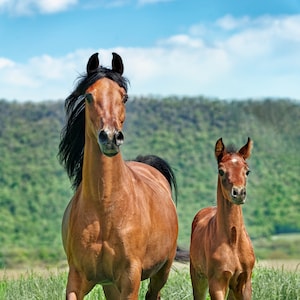
Every spring an owner emails us a photo of a sweet bay mare and the same sentence: "She's such a good girl, I want a baby out of her." We get it. But a foal is not a souvenir of a horse you love. It's a three-year commitment to a green animal you can't ride, a five-figure bill before anything goes wrong, and a small but real chance you'll lose the mare you were trying to honor. So before the romance takes over, we make people sit down with a checklist.
Start with the cold math. A live foal on the ground — stud fee, mare care, vet work, the mare's own keep for a year, then the foal's keep until it's old enough to start — runs most owners $15,000 to $25,000 by the time it's a two-year-old, and that's if nothing goes sideways. A dystocia, a sick foal, a retained placenta, and you're well past that. If the number makes you flinch, you have your answer, and there is no shame in it.
Then ask why this mare. The good reasons are specific: she has a genuine performance record, a pedigree the market wants, conformation that holds up to honest scrutiny, and a temperament you'd happily reproduce. The poor reasons are emotional: she's old and you're not ready to let go, she got hurt and can't be ridden, or she's simply the horse you have. Pasture-sound and pasture-mate are not breeding credentials. A mare with a chronic unsoundness can sometimes still carry, but lameness that traces to conformation will often print straight onto the foal.
Her age and reproductive history matter more than people think. A maiden mare in her teens is a harder project than a proven producer at eight. If she's never had a foal and she's fifteen, we want a breeding soundness exam before you spend a dollar on semen: a rectal palpation and ultrasound of the ovaries and uterus, a uterine culture and cytology, and often a biopsy to grade the endometrium. That biopsy grade is one of the best predictors we have of whether she'll actually carry to term. We'd rather you get bad news in February than after you've paid a stud fee.
Be honest about your setup, too. Do you have somewhere safe to foal, or a foaling facility within a sane drive? Are you prepared to do foal watch, or pay for it? When the time comes you'll want to have read the signs and supplies for foaling long before the udder waxes up, because the average mare foals at two in the morning and waits for no one. If your answer to "where will this happen" is a fuzzy "I'll figure it out," figure it out first.
If the mare passes and you're still committed, the work shifts to the cross itself. Breeding is not about finding the prettiest stallion in the magazine; it's about matching a stallion to fix your mare's faults rather than doubling down on them. A mare who's a touch back at the knee does not need a stallion with the same flaw, no matter how many ribbons he has. Pick to improve.
And understand what the next eleven months ask of you. A pregnant mare isn't a horse on vacation; she needs a real plan for caring for the broodmare through pregnancy, from vaccination timing to a feeding program that changes in the last trimester. The decision to breed is the easy, fun part. The follow-through is the job.
Here's the test we give people. Imagine the foal is exactly average — not the next big winner, just a nice, sound, ordinary horse that will need a job and a home for twenty-five years. If you'd still be thrilled, breed her. If your enthusiasm depended on the foal being special, you're gambling, and the house edge in this game is brutal. There are thousands of good horses already on the ground looking for people. The world doesn't need another foal. It needs you to want this one for the right reasons.
None of this is meant to talk you out of it. There is nothing like watching a foal you planned take its first wobbly canter across a paddock. We just want you to walk in with your eyes open, your checkbook ready, and a vet on speed dial. Breed the right mare to the right horse for the right reason, and the rest is manageable.