Designing a barn that doesn't fight you every day
A bad barn layout costs you steps, water, and minutes every single day for the life of the building. Most of those costs were locked in before the first horse ever moved in.
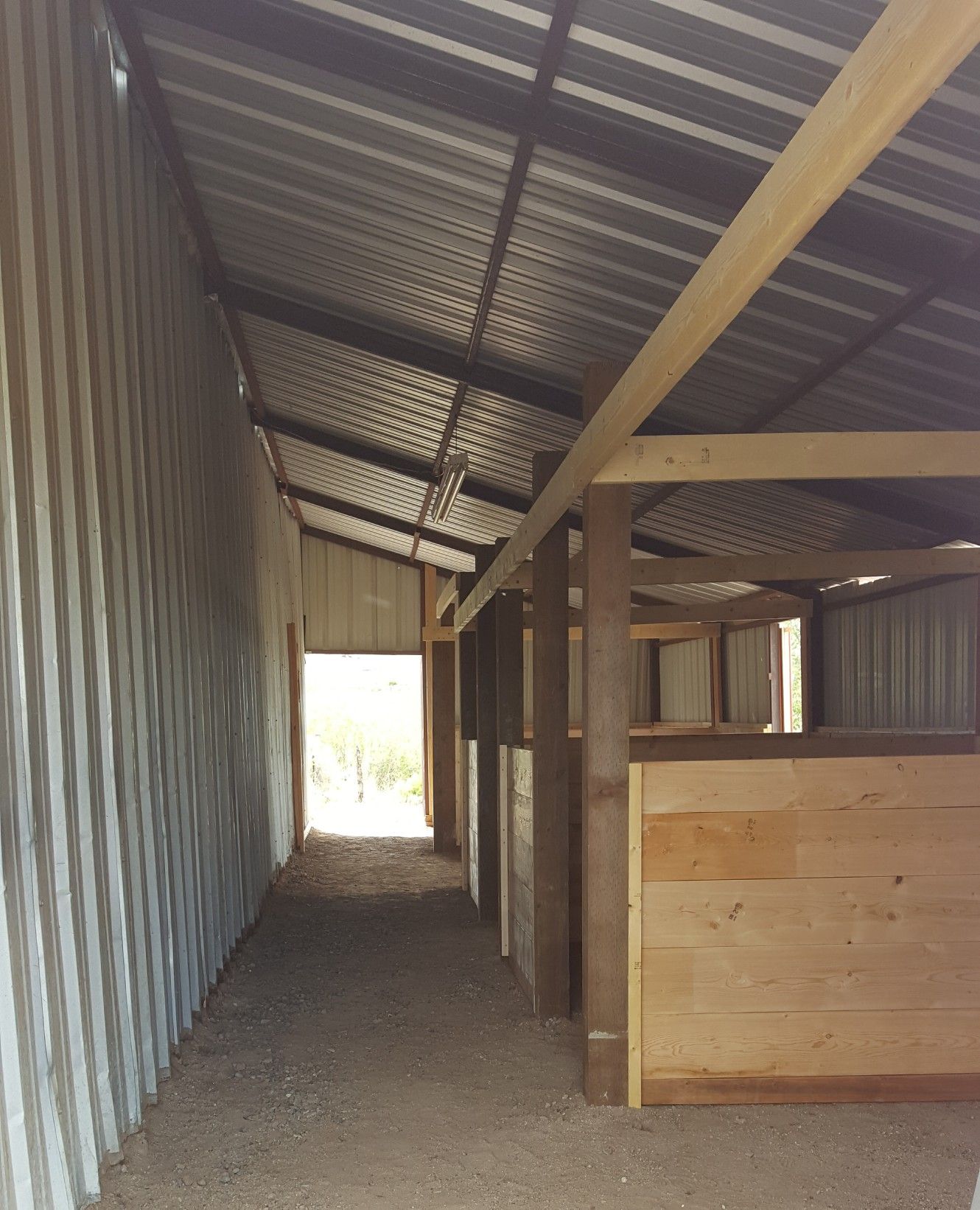
Every barn has a layout tax — the steps and minutes the building charges you for chores you'd have to do anyway. A poorly laid out barn collects that tax twice a day, forever. Walk enough properties and you'll find a beautiful timber-frame facility where the only frost-free hydrant sits at the far end of a hundred-and-twenty-foot aisle, which means every winter water bucket is a hundred-and-twenty-foot walk with a sloshing five-gallon bucket. Multiply that by twenty stalls, twice a day, for four months, and you understand why the staff turns over every spring.
The mistakes that hurt most are the ones poured in concrete. You can repaint a stall. You cannot easily move a hydrant, a drain, or a support post. So the decisions worth obsessing over are the fixed ones: where water comes from, where waste goes, and how the aisle flows.
Start with water, because it's the chore you do most. Frost-free hydrants every forty feet or so turn winter watering from a slog into a quick top-off. If you're building new, run water to both ends of the aisle and into the wash stall. Horses drink roughly five to ten gallons a day, more in summer, and the easier you make it to deliver that water, the more reliably it actually happens.
Then think about the aisle itself. A twelve-foot aisle lets you cross-tie a horse and still get a wheelbarrow past it. A ten-foot aisle does not, and you'll spend years untangling that math one wheelbarrow at a time. Slope the aisle and stall floors toward drains so water and urine have somewhere to go; standing moisture is how you get thrush, flies, and a barn that smells like ammonia. Good drainage is the unglamorous backbone of a healthy barn.
Position the feed room and hay storage where the cart's path is short and straight, ideally central, so morning feeding isn't a relay race. Keep hay storage separated from the horses themselves — ideally in its own structure — because stored hay is the single largest fire load in any barn, and where it sits is as much a safety decision as a convenience one. We won't relitigate the whole case here; the prevention side of that is its own checklist in barn fire safety and prevention, and a smart layout is the first line of that defense.
A few placement decisions pay you back daily. Put the wash stall near the water source and the tack room, so the path from grooming to riding is short. Locate a stall or two near the office or the entrance for horses who need watching — the colic-prone gelding, the mare due to foal, the new arrival on stall rest. Make sure at least two exits are wide enough to lead a panicked horse through quickly. And build in a quarantine stall or paddock that shares no airspace and no water source with the main barn; you will be grateful for it the first time a horse comes back from a show with a snotty nose.
The layout also has to serve the routine, not fight it. If your morning sequence sends staff from feed room to far field to stalls, the building should make that loop short and one-directional, not force people to double back through their own wheelbarrow tracks. When you're planning a new build, walk the proposed daily barn chore routine that works on paper first, tracing every trip a groom makes in a morning, and move walls on the drawing until those trips get short. It's far cheaper to move a line on a blueprint than a post in the ground.
If you've inherited a barn you can't rebuild, you still have moves. Add a hydrant. Re-grade a drain. Convert a dead-end tack room into a pass-through. Relocate the feed cart's home base to cut the morning loop. None of it is as good as designing it right from the start, but a barn that fights you a little less is worth real money in saved labor and saved turnover.
The best compliment a barn can get is that nobody notices it. The water's where you need it, the aisle's wide enough, the muck path is short, and the place just works. That invisibility is the whole goal, and it's almost always the product of decisions made long before the horses arrived.