Loading and hauling: getting there safely
More horses are hurt in trailers than in the show ring. Loading calmly and driving like you've got a passenger who can't hold on is the whole game.
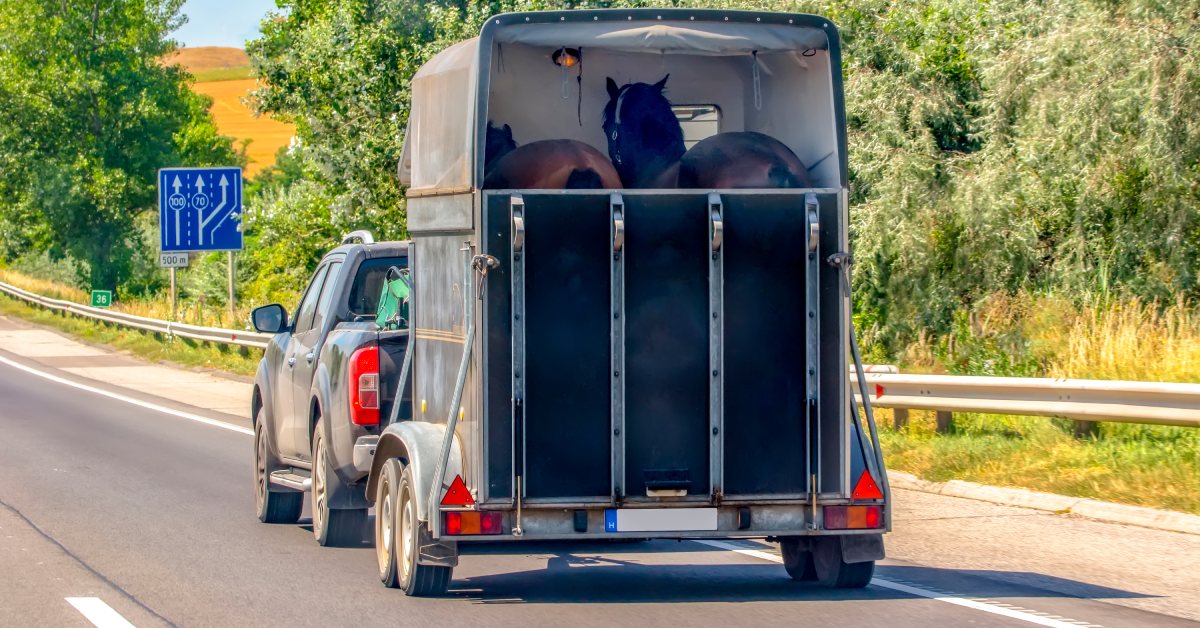
The most dangerous part of any show isn't the oxer in the jump-off. It's the forty-mile drive there and the two minutes it takes to load a horse who doesn't want to go. We've seen a relaxed gelding scramble and slice a hind leg open on a divider because the driver took a roundabout too fast, and we've seen a green horse flip over backward at the ramp because someone tried to muscle him on. Both were preventable. Loading and hauling safely is a set of habits, not a talent.
Start before you ever ask the horse to load by making the trailer and the truck themselves safe. A horse who loads beautifully into a deathtrap is still in danger.
1. Do a full rig check in daylight: tire pressure and tread including the spare, brake lights and turn signals, the breakaway brake battery, the hitch latched and the safety chains crossed underneath the coupler. Crossed chains cradle the tongue if the hitch fails.
2. Prepare the trailer interior: sweep it out, check the floorboards for soft spots, hang a hay net the horse can reach, and open the windows and vents so it's bright and airy rather than a dark cave.
3. Protect the horse's legs and head for the ride: shipping boots or standing wraps and bell boots guard the legs against scrambling, and a poll guard helps a tall or anxious horse who might throw his head.
4. Fit the halter and tie correctly: a properly fitted, breakaway-tie halter goes on, tied short enough that he can't get a leg over the rope but long enough to let him balance his neck against the motion.
With the rig ready, loading becomes a training conversation rather than a wrestling match. Lead the horse straight at the ramp with energy and your eyes up, walk on as if it's obvious he's coming with you, and don't stop at the bottom to negotiate. If he hesitates, keep his feet moving with small asks rather than hauling on his face. A horse who plants will load with patience and pressure-and-release; a horse who gets dragged learns the trailer is a fight. Reward the try — a step forward gets a release and a kind word — and most horses load within a few minutes. The groundwork that makes this easy is the same calm leadership you build everywhere else on the ground.
Once he's on and tied, the driver becomes the most important person in the horse's day. Drive like there's a passenger standing on a skateboard in the back, because functionally there is. Accelerate gradually, brake early and gently, and slow to a crawl for turns and roundabouts — horses can't see corners coming and have to brace for every one. Leave a long following distance, take the smoother route over the faster one, and on a long haul stop every few hours to offer water and let the horse rest his legs, but never unload at a busy rest area where a loose horse could bolt into traffic.
Heat and air matter more than people think. A closed trailer on a warm day becomes an oven within minutes, so keep vents and windows open and never leave a horse standing loaded in the sun while you run an errand. On long summer hauls, offering electrolytes the day before travel keeps a horse drinking, since many won't drink well from strange water on the road.
Build your loading cushion into the day's plan. The horse who loads perfectly at home will test you the morning of a show when he can feel the change in your energy, so leave early enough that a ten-minute loading delay doesn't blow your warm-up. That timing lives on the show-day packing list you'll actually use right alongside the gear, because the calmest departures are the ones where loading is the only thing left to do.
Hauling a horse you've just bought home deserves extra care, since a stressed horse in an unfamiliar trailer is the riskiest combination there is; the specific precautions are worth reviewing in transporting a newly purchased horse before that first trip. Get the rig right, load with patience, and drive like the cargo can't hold on, because it can't.