How to set board rates that actually cover your costs
Most barns price board by glancing at what the place down the road charges. That's how you end up subsidizing other people's horses. Here's how to build a number from the ground up.
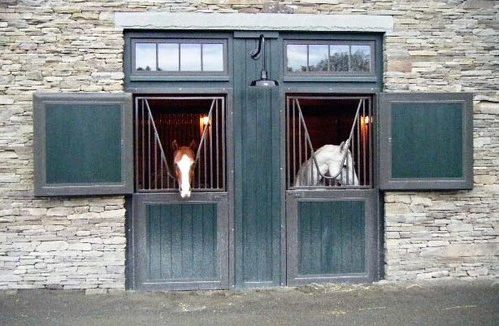
Most barn owners set their first board rate the way almost everyone does: they call three barns within twenty minutes, find out they charge between $550 and $700 a month for full board, and land on $625 because it feels competitive. Three years later they're working sixty-hour weeks and watching the checking account flatline, finally sitting down to do the arithmetic that should have been done before anyone ever took a deposit.
Here is the uncomfortable truth: the barn down the road is not your accountant. They might be undercharging, running on family land they paid off in 1998, or quietly losing money the same way you are. Pricing off your competitors only works if they happen to be right, and they usually aren't.
Start with your real cost to keep one horse for one month. Hay is the big one. A horse eating roughly two percent of its bodyweight in forage burns through about half a ton a month, so at $300 a ton in many regions that's $150 in hay alone before grain, shavings, or a single human touches a pitchfork. Add bedding (budget about $45 per stall per month on pine shavings), grain or ration balancer, and then the cost nobody counts: labor. If a worker spends fifteen minutes a day on a horse between feeding, mucking, turnout, and blanketing, that's roughly seven and a half hours a month. At $18 an hour that's $135 per horse, and that's if you're not paying yourself for the hours you put in.
Then layer on the fixed costs that exist whether you have ten horses or twenty: mortgage or lease, property insurance, liability coverage, electricity, water, manure removal, equipment, fencing repair, arena footing, and the tractor that always breaks in February. Total those annual fixed costs and divide by your realistic stall count — not your maximum capacity, your honest average occupancy. A 20-stall barn that runs at 16 should divide by 16.
Run this honestly and the true cost to keep a full-board horse often lands somewhere that stings — say $710 a month against a $625 rate. That's $85 a month paid for the privilege of caring for each of those horses, which means the busier the barn gets, the broker it gets. That's the trap.
A few principles worth holding to:
Price the variable stuff separately. Board should cover the predictable baseline. Blanketing, holding for the farrier, body clipping, extra grain, supplement administration, and medicating a sick horse are services, and services have prices. The barns that quietly absorb all of that are the ones that burn out. If you're not sure which model even fits your operation, it's worth getting clear on the differences between full, partial, and self-care board before you publish a rate sheet, because the labor assumptions are wildly different.
Build in a real margin, not a guilt-tinged one. You are running a business, and a business that doesn't profit can't fix the run-in shed or give your staff a raise. Aim for board to clear cost plus 15 to 20 percent. That margin is what keeps the lights on in a bad hay year.
Raise rates on a schedule, in writing, every year. The single most common mistake we see is a barn owner who hasn't raised board in five years because they dread the conversation, then has to spring a $150 jump on everyone at once. A predictable 3 to 5 percent annual increase, announced sixty days out, is almost never the thing that loses you a boarder. Surprise is what loses you a boarder.
Track where the money actually goes. You cannot price what you don't measure, and a shoebox of receipts isn't measurement. Knowing your per-horse cost in real time is the whole game, which is exactly why so many barns move invoicing onto a system — Apex makes boarding billing effortless enough that you can see your margin per stall instead of guessing at it in April when taxes are due.
Do this once, honestly, and the number you arrive at might feel high. It probably isn't. It's probably just the first time you've seen what your work is actually worth. Charge it, explain it plainly, and deliver care good enough that the price makes sense to the people writing the checks.