Mucking out: doing it faster, cleaner, and with less bedding
Most people muck stalls the slow way and throw out good shavings doing it. A better technique cuts your bedding bill, speeds up the morning, and keeps stalls drier and healthier.
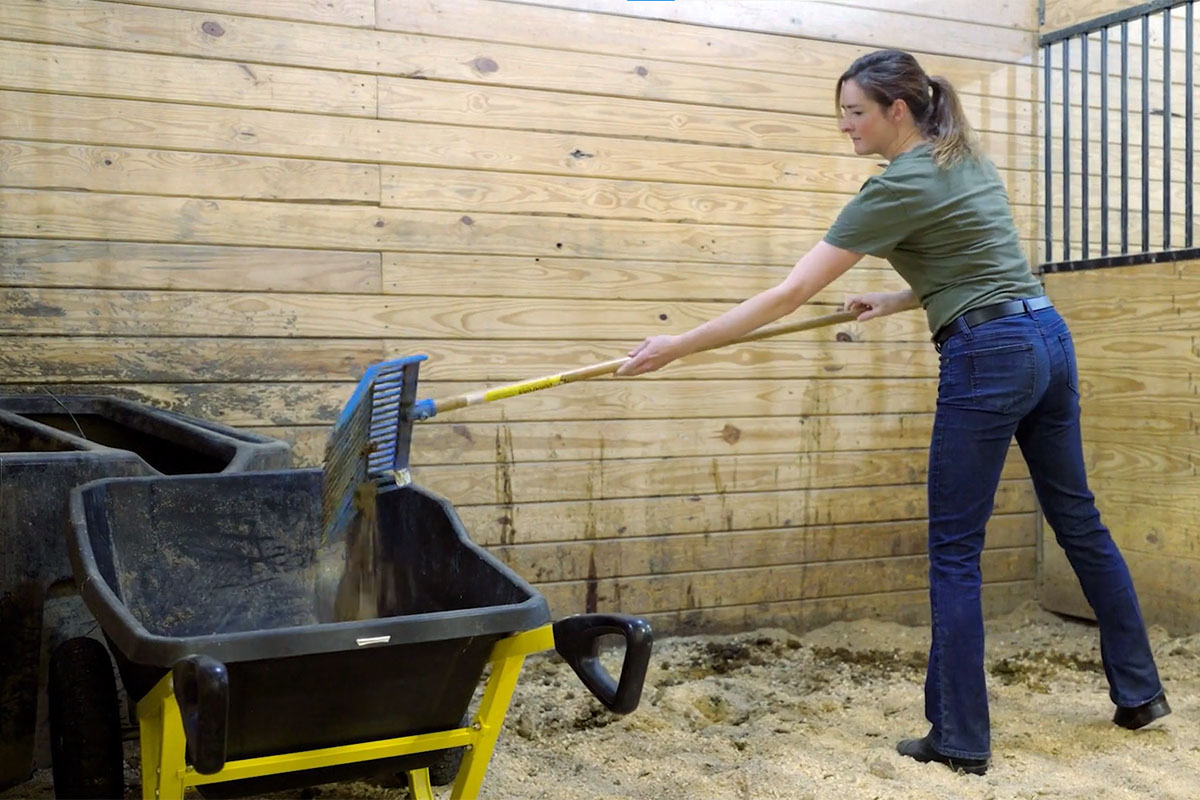
Watch an experienced groom clean a mare's stall in about four minutes and you'll wonder, genuinely puzzled, why yours always takes fifteen. The answer isn't that they're faster. It's that mucking out is a technique, and almost nobody is ever taught it. Most people dig, sift halfheartedly, toss out a fork of perfectly good shavings with every load, and call it done. Do that across twenty stalls and you're burning an hour of labor and a wheelbarrow of bedding you paid for.
The goal of mucking is simple: remove all the manure and the urine-soaked bedding, and keep everything else. The clean shavings are the expensive part, and the whole skill is separating them from the waste instead of throwing the baby out with the bathwater.
Here's the method worth teaching every new groom, and it holds up whether you're on shavings, pellets, or straw:
1. Pick the manure first, before you touch the wet spots. Work the pile pin sections, sifting each forkful against the stall wall so clean bedding falls back through the tines and only manure rides up. A good shavings fork with closely spaced tines does most of the work; a cheap one with wide gaps lets manure fall through and forces you to chase it.
2. Find the wet spot — usually one corner, sometimes the center — and dig down to the mat or floor. Lift out the soaked, ammonia-smelling bedding completely. If you leave a damp layer, it wicks moisture up into the fresh bedding you add and you're cleaning the same spot tomorrow.
3. Bank the remaining clean bedding up against the walls and let the stripped floor breathe for a few minutes while you work the next stall. A few minutes of air dries the mat and cuts the ammonia smell that irritates equine airways.
4. Pull the banked bedding back down and add only enough fresh to replace what you removed. A stall doesn't need to look like a snowdrift; it needs a consistent cushioning depth, deeper at the edges where horses lie down and a touch lighter in the middle.
That's the whole job. The discipline is in step one — sift, don't shovel — because that single habit is what saves the bedding.
A few choices upstream make the daily work easier. Rubber mats are the best money a barn spends; they cut bedding use dramatically, protect joints, and give you a hard floor to scrape against. Bedding type matters too: pellets expand and absorb urine into tidy clumps that lift out cleanly, while traditional flake shavings cushion well but get tossed more easily by a stall-walker. Whatever you choose, buy a fork suited to it. The right tool is the difference between four minutes and fifteen.
The other half of stall management is what happens to everything you fork out. A twenty-stall barn generates a startling volume of waste, and where it goes is a real operational and environmental question rather than an afterthought — we get into composting, spreading, and removal in manure management for horse properties. And mucking doesn't live in isolation; it's the back half of the morning, after feed and turnout, which is exactly why it slots where it does in a daily barn chore routine that works. Clean an empty stall while the horse is turned out and you'll finish in half the time and use less bedding doing it.
One health note worth saying plainly: a stall that always reeks of ammonia is a respiratory problem waiting to happen, not just an unpleasant one. Horses spend hours with their heads down near that bedding, and chronic ammonia exposure is linked to airway inflammation and coughing. If you can smell it strongly at horse-nose height, strip the stall to the mat, let it dry, and improve your wet-spot removal. Your horses' lungs and your bedding bill both improve from the same good habit.
Get the technique right and the savings compound quietly. Less bedding bought, less labor spent, drier stalls, healthier airways. It's the most repeated chore in the barn, which means it's the one where doing it well pays back the most.