Turnout blankets: denier, fill, and what you actually need
Denier, grams of fill, gusset cut, surcingle design — the blanket aisle is built to confuse you. Here's how to translate the spec sheet into a blanket your horse can actually wear.
Some links in this article are affiliate links; Apex Equine may earn a commission at no extra cost to you.
Every fall, someone in the boarder lounge holds up a blanket tag and asks what 1200D, 200g actually means. The numbers aren't marketing fluff, but they don't mean what most people assume, so let's translate the spec sheet into a blanket your horse can live in.
Denier is the toughness of the outer shell — the thread weight of the fabric. A 600D shell is light-duty and will tear if your gelding plays rough or backs into a T-post; 1200D is the sensible standard for normal turnout; 1680D or "ballistic" is for the pasture demolition crew who shred everything. Higher denier is heavier and a touch stiffer but survives the field. For a horse turned out in a herd, don't go below 1200D and save yourself the repair bills. SmartPak's turnout blanket selection lets you filter by denier, which is the fastest way to compare apples to apples.
Fill is warmth, measured in grams of polyfill. Zero fill is a rain sheet — waterproof, no warmth, for keeping a clipped horse dry in a cool drizzle. Lightweight is around 100g, midweight 200g, and heavyweight 300g and up. Most horses in a temperate climate are well served by a waterproof sheet and a midweight, layered as needed; you rarely need a 400g monster unless you've body-clipped a horse who lives out in a hard northern winter. Resist the urge to over-blanket. A fuzzy, unclipped horse with a good winter coat and shelter often needs far less than owners think, and a sweaty horse under too much fill is worse off than a slightly cool one. Knowing how blanketing fits the bigger picture of winter horse care essentials will keep you from buying warmth he doesn't need.
Fit is where blankets succeed or fail, and it's measured nose-to-tail down the side, not over the back. Stand the horse square and run a soft tape from the center of his chest, along his side, to the edge of his tail; that number in inches is your blanket size. A blanket that's too small rubs the shoulders bald and binds across the chest; too big and it slips sideways, rotates, and becomes a tangle hazard. Look for a deep shoulder gusset (it lets the horse put his head down to graze without the blanket pulling), a tail flap, and a shaped, contoured cut for high-withered horses. Dover carries fit-specific cuts in their turnout blanket range including high-neck and Thoroughbred-cut options that solve a lot of rub problems.
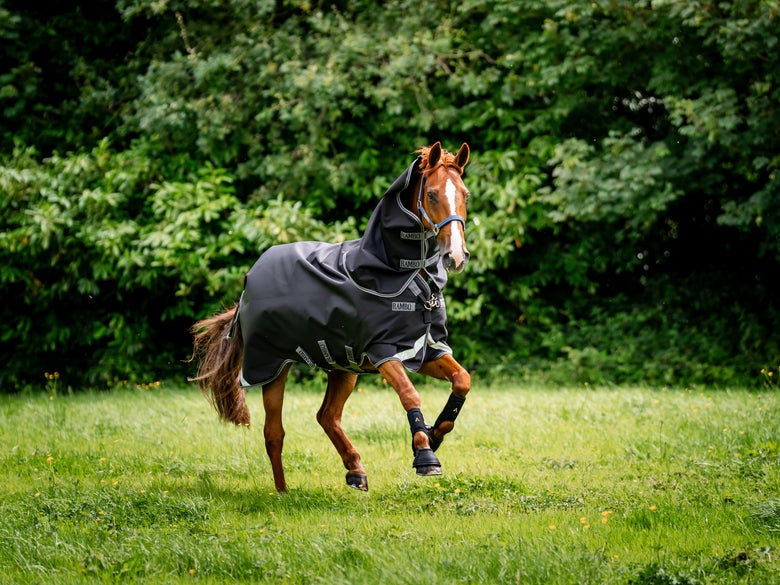
Hardware matters more than the catalog photo. Closed-front blankets slip over the head and have fewer chest buckles to fail; open-front are easier on horses who hate things over their faces. Surcingles should cross under the belly and snug to a hand's width of clearance. Leg straps loop through each other so they don't slap or chafe. Check that buckles are smooth and beefy, because a January morning is no time to fight a frozen, flimsy clip. When Coral at Birchwood finally replaced her bargain blanket with a Rambo from Horseware, the difference wasn't the warmth — it was that nothing broke for three winters. Riding Warehouse stocks the Horseware Rambo and Amigo lines that have earned that durable reputation.
Buy two when you can: a waterproof sheet and a midweight is more flexible than one heavy blanket, because you can layer for a cold snap and pull a layer for a thaw. Always have a spare or a backup, since a blanket that gets soaked through or torn open mid-storm leaves you with a wet, cold horse and no plan. Keep a cheap blanket repair patch kit in the tack room for the inevitable ripped gusset.
Once the blankets are bought, they only earn their money if you maintain them — re-waterproofing and patching a good blanket each season is cheaper than replacing it, and the full routine for blanket care and repair will get you five or six winters out of gear most people throw away after two. The right blanket is the one that fits, sheds water, survives the field, and matches the weather you actually have.