Building a turnout schedule that keeps the peace
Turnout is where boarding barns most often go wrong. The wrong horse in the wrong group, or too little grass, and you've got vet bills, fence repairs, and an owner threatening to leave.
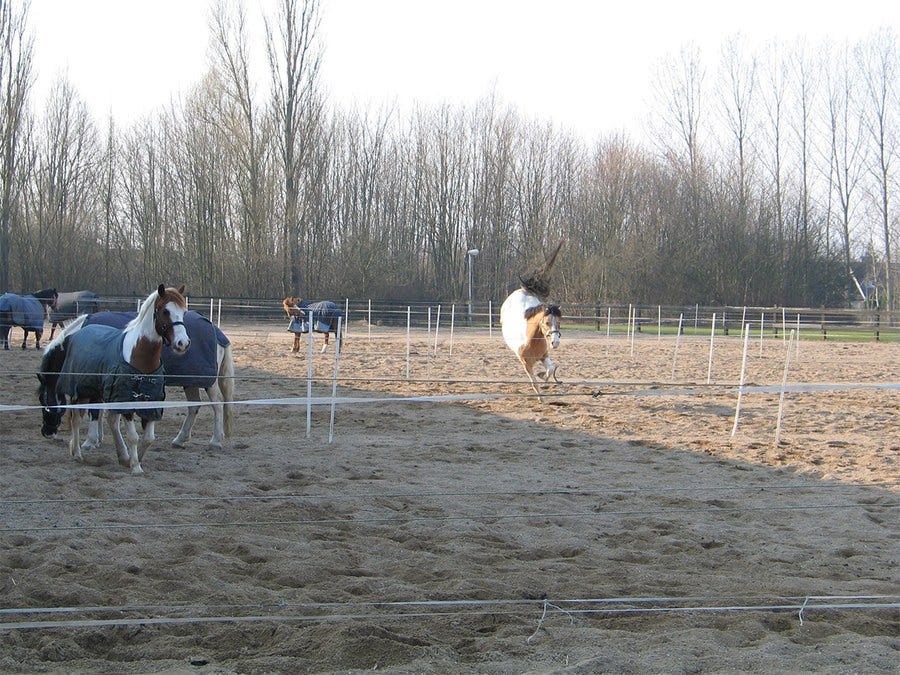
The fastest way to start a war in a boarding barn is to put the wrong two horses in the same field. Barns learn this the expensive way: a new warmblood gelding turned out with an established herd of four, everyone assuming they'd "sort it out," and an hour later he's pulled out with a hoof-shaped gash on his shoulder that cost three hundred dollars to stitch. The herd had sorted it out. He just wasn't going to be part of it.
A turnout schedule is really two problems stacked on top of each other: who goes with whom, and where they go. Get the social side wrong and you get injuries. Get the land side wrong and you get mud, bare dirt, and pasture that's gone by July. Both problems reward thinking ahead.
Start with the herds, because horses are herd animals with strong opinions about each other. Group by temperament and need, not by convenience. Geldings and mares are often kept separate to cut down on drama, though plenty of barns run mixed groups successfully once the dynamics are known. Keep the easy keepers — the air ferns who get fat looking at grass — in a separate group on a drylot or a grazed-down field, away from the hard keepers who need every blade. Old horses and youngsters often do better in their own quiet groups rather than fighting for position with pushy middle-aged horses.
Introduce new horses slowly and deliberately. The protocol that saves the most vet bills looks like this:
1. Turn the new horse out alone in a field adjacent to the herd for a few days, so they can meet over a safe fence line without contact.
2. Introduce one quiet, low-ranking member of the herd as a companion in a shared field, and watch them for the first hour.
3. Add the rest of the group gradually over several days, ideally in a large field where a bullied horse has room to escape rather than getting cornered.
4. Pull shoes if you can, especially hind shoes, during introductions — a kick from a bare hoof does far less damage than one from a steel shoe.
Once the social map is settled, the land becomes the constraint. Continuous grazing on the same field turns good pasture into a weed-and-dirt lot within a season, so a turnout schedule has to rotate horses across fields to let grass recover. This dovetails directly with how you manage the ground itself; the resting, mowing, and grazing-height side of it is a whole discipline we cover in pasture management and rotation. The short version: move horses off a field before they graze it below three or four inches, and give it time to bounce back before they return.
Build the schedule around real limits. How many safe acres do you have? A common rule of thumb is two acres per horse for sustainable grazing, though most boarding barns run tighter than that and supplement with hay. How much shelter is in each field — every group needs access to shade in summer and a windbreak in winter. And which horses can't be out together no matter what, because of metabolic needs, lameness, or pure personality. Write it all down somewhere the whole team can see, not in one person's head, so the schedule survives a day off.
Turnout also intersects with health in ways that are easy to overlook. Shared fields, shared water troughs, and nose-to-nose fence-line contact are exactly how respiratory bugs and skin conditions move through a barn, which is why your turnout groups should respect your biosecurity protocols for boarding barns — a new arrival doesn't go straight into the main herd, and a coughing horse comes off shared turnout until you know what you're dealing with.
The barns that handle turnout well treat it as a living schedule, not a fixed one. Groups shift as horses come and go, as a gelding gets gelded out of his teenage attitude, as a field needs resting. Weather forces changes — you bring everyone in ahead of an ice storm, you turn out at dawn to beat July heat. The manager's job is to hold the whole map in view and adjust before a problem becomes a vet bill or an angry owner. Done right, turnout is the part of the day horses look forward to and you don't have to think twice about. Done wrong, it's where your peace, your pasture, and your profit quietly leak away.