Picking the right shows so you build, not break, confidence
Enter too high and you teach yourself and your horse to fail. The right show calendar is a ladder, and you climb it one rung at a time.
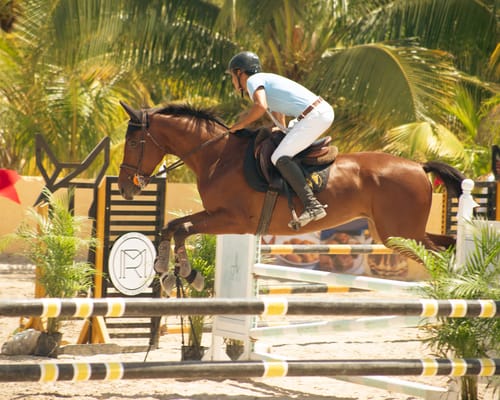
An eager, talented working student once entered a 1.10m jumper class on a horse confirmed at 90 centimeters because a friend was going and the prize money looked good. They had three rails and a refusal, and the rider spent the next month convinced she'd lost her nerve. She hadn't. She'd just brought a knife to a gunfight, and the only thing that round taught the horse was that the jumps were now scary. Picking shows above your level doesn't toughen you up; it teaches both of you to expect failure. The right calendar does the opposite.
Think of your show season as a ladder where every rung is a class you can win, or nearly win, on a good day. You want to enter at a height and difficulty where success is genuinely available, then climb only when that rung feels easy. The point of competing isn't to find your ceiling on the worst possible day in front of a judge; it's to confirm and consolidate what you've already trained at home. A confident horse who's used to going clear is worth more than a brave one who's used to getting in trouble.
Be ruthlessly honest about your level, because wishful thinking is expensive in entry fees and confidence. Your show level is the height and difficulty you can ride well on an ordinary day, not the one you've scraped through once at home with your trainer talking you over every fence. If you school 90 centimeters comfortably, you show at 80 — you always compete a notch below your schooling height, because the atmosphere, the strange ring, and the nerves will eat that margin. The same logic holds for a dressage test: show the level below the one you're schooling, where the movements are automatic.
Match the type of show to where you are, too, not just the height. Schooling shows are the bottom rungs of the ladder and the most underrated tool in the sport: low cost, relaxed atmosphere, and the freedom to school in the ring or scratch a class if the day goes sideways. A green horse or a nervous rider should bank a whole season of schooling shows before ever entering a rated one. Rated shows raise the pressure, the cost, and the competition, and they're worth it only once the lower-stakes version has become routine.
When you build the actual calendar, sequence it so confidence compounds. Open with a couple of easy outings well within your comfort zone to get the horse out and the routine grooved. Put the more ambitious goal — the move-up class, the bigger venue — in the middle or back half of the season, after you've banked some good rounds. And always plan an easy show right after a hard or disappointing one, so a rough day doesn't become the last memory of the season. The good trainers schedule wins on purpose.
Read the prize list before you enter, not after, because the details decide whether a show fits. Check the heights, the divisions offered, whether there are warm-up or schooling classes, the footing, and the entry deadlines. A show with a small, friendly division at your exact height is a better choice than a prestigious one where you'd be the smallest fish in a much deeper pond. If you're new to a discipline and unsure which division even fits you, sort that out first — the breakdown in hunters, jumpers, and equitation which ring is yours will tell you what you're actually entering before you pay for it.
For genuine beginners, the very first show is its own rung and deserves its own preparation, well below anything competitive. Treat it as a field trip with a class attached, and lean on your first horse show survival guide to set expectations so low that simply completing the day counts as a win. That early success is the foundation the whole ladder is built on.
The riders who last in this sport aren't the ones who moved up fastest. They're the ones who moved up when they were ready and built a stack of confident rounds underneath every new height. Enter where you can succeed, climb when it's easy, and you'll go higher in the end than the rider who reached too far too soon.