Hunters, jumpers, and equitation: which ring is yours?
Three rings, three completely different sports, and most newcomers can't tell them apart from the rail. Here's what each one actually rewards.
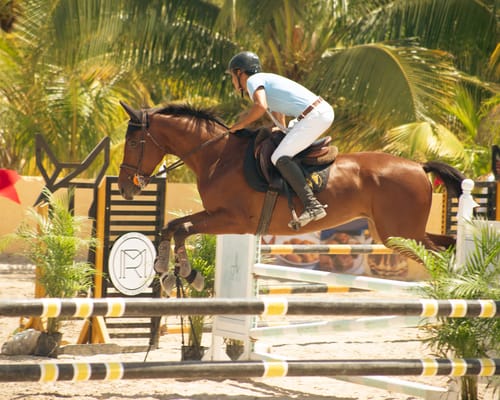
Stand at a rated show and you'll see three jumping disciplines that look superficially identical — a horse, some fences, a rider in a coat — and reward almost opposite things. We've watched riders spend a season chasing ribbons in the wrong division simply because nobody explained which sport they were actually playing. Knowing the difference saves you money, frustration, and a horse who's been asked to be something he isn't.
The hunter ring judges the horse, and it judges style. A hunter round is scored subjectively on the horse's movement, jumping form, manners, and the overall picture of effortless, ground-covering grace. The ideal hunter floats around the course on a soft contact, meets every fence out of a smooth rhythm, jumps in good form with a round bascule, and makes the whole thing look like it required no effort at all. Speed is irrelevant; in fact, rushing is penalized. A horse named Easy Money who packs a kid around at a metronome canter and never changes expression is a hunter to his bones.
The jumper ring judges results, full stop. It's the most objective of the three: clear the fences without knocking rails down, do it inside the time allowed, and in a jump-off, do it fastest. Nobody cares if your horse jumps with his knees to his eyeballs or hollow as a banana, and nobody cares if he gallops the turns like a freight train. A scrappy, careful, quick horse who hates touching rails will beat a gorgeous mover every time. This is the ring for the rider who loves the puzzle of a tight inside turn and the adrenaline of the clock.
Equitation is the odd one out: it judges the rider. The horse is just the vehicle, and the scoring is all about your position, effectiveness, and the invisibility of your aids. An equitation course often asks harder technical questions — bending lines, tricky distances, tests where the judge calls riders back to perform specific movements — because the point is to reveal who can ride. Strong equitation builds the foundation that makes you better in every other ring, which is why we push it even for riders who say they only want to do jumpers.
So which is yours? Start by being honest about the horse you have, because the wrong horse in the wrong ring is a long, expensive lesson. A daisy-cutting warmblood with a quiet brain belongs in the hunters; a careful, catty horse who loves to go belongs in the jumpers; and a generous, adjustable horse helps a rider develop in equitation. Match the horse to the job before you match the rider to the dream.
Then think about what you enjoy. If precision and a clear right answer light you up, the jumper ring's "clear and fast" scoring will feel honest and addictive. If you love polish and the pursuit of a perfect, quiet picture, the hunters reward exactly that. If you want to genuinely get better as a rider, equitation will expose every weakness and force you to fix it. None of these is harder or more legitimate than the others — they're just different sports wearing similar boots.
Whichever ring you choose, the demands on the horse's body are real and specific, and you can't fake your way around them. Before you commit to a show season in any division, build the engine first with the work in conditioning your horse for competition, because a hunter needs the stamina to stay relaxed through eight fences and a jumper needs the power and recovery for tight rollbacks. And once you know your ring, let it shape your calendar — pick events that fit your level using picking the right shows for your level rather than entering whatever's closest.
Most riders eventually settle into one ring and dabble in the others, and that's healthy. Try all three at schooling shows before you spend rated-show money committing to one. The ribbon matters less than discovering which version of the sport makes you want to get up at 4 a.m. to do it again.