Conditioning: bringing a horse to peak fitness without breaking him
You can't lesson a horse into competition fitness any more than you can run a marathon on a few jogs. Real conditioning is patient, structured, and slow.
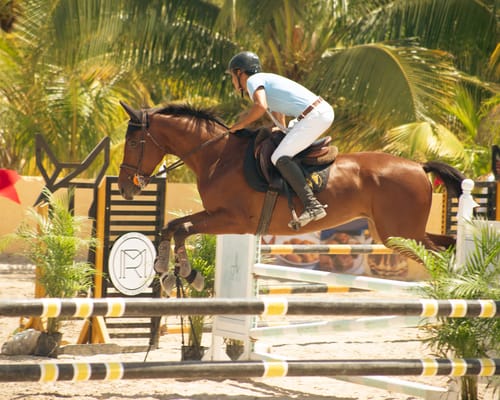
Every spring brings the same story: a rider who hacked lightly all winter wants to jump a full course or ride a long test in three weeks, and the horse comes up sore or stops eating from sheer fatigue. The body doesn't negotiate. Tendons, bone, lung capacity, and muscle all adapt on their own timelines, and the slowest of them — tendon and bone — take months, not weeks. Conditioning a horse for competition is the art of asking the body to adapt fast enough to compete and slow enough not to break.
The cardinal rule is to build the base before you build the sport. Long, slow distance work — extended walking and steady trotting on varied terrain — strengthens tendons, ligaments, and bone and builds the aerobic engine that everything else sits on. For a horse coming back from a quiet winter, plan to spend four to six weeks doing mostly walk and trot hacks, gradually lengthening the sessions, before adding any real intensity. It's boring. It's also the work that prevents the soft-tissue injuries that end seasons. Skip it and you're building a house on sand.
Once the base is in, add intensity in small, deliberate doses, and change only one variable at a time. The oldest principle in conditioning is to increase duration, frequency, or intensity — but only one of the three in any given week. Add ten minutes to the hack, or add a day, or add some canter sets, but not all three at once. Hills are your best friend here: trotting and cantering up a gradual grade builds hindquarter strength and cardiovascular fitness with far less concussion than drilling on the flat. Interval work — short canter sets with walk breaks between — teaches the body to recover quickly, which is exactly what a jump-off or a cross-country round demands.
Let the horse tell you whether the work is landing, because he will if you listen. Take his resting heart rate and learn how fast it returns to normal after a canter set; a horse getting fitter recovers faster, and a recovery that's getting slower is a horse you're overcooking. Watch his appetite, his attitude under saddle, and his legs every single day. A little muscle soreness early on is normal; heat or filling in a tendon, a dull eye, or a horse going off his feed are not, and they mean back off now. Reading these signs is the same daily soundness habit that catches small problems before they become layups.
Recovery is not the absence of training — it's part of the training. Muscle and connective tissue rebuild stronger during rest, not during work, so a horse worked hard every day without easy days actually gets fitter more slowly and breaks down faster. Build in genuine light days and at least one full day off a week, plus proper cool-downs: ten minutes of walking after every session to bring the heart rate down and clear metabolic waste from the muscles. Turnout, which keeps a horse moving gently all day, does more for soundness than any amount of arena drilling.
Protect the legs as the work ramps up, because the conditioning that builds them can also stress them. Good boots or wraps for schooling, attention to footing, and cold-hosing or icing after a hard session all help; the specifics of what protects what are worth getting right, and we point riders to boots and wraps leg protection without the guesswork rather than guessing. Hard ground and tired legs are how conditioning injuries happen, so adjust the footing and the workload together.
Match the conditioning to the actual demands of your sport, since a hunter, a jumper, and a dressage horse need different engines. Before you build the program, be honest about what your ring asks — the differences in hunters, jumpers, and equitation which ring is yours translate directly into how much stamina, power, and recovery you need to train. A jumper needs explosive power and fast recovery; a dressage horse needs sustained, controlled strength and suppleness; a hunter needs the relaxed stamina to stay soft and rhythmic through a long day.
Give yourself eight to twelve weeks of honest, progressive work for a horse coming off a layup, longer for a young or previously unfit one. There is no shortcut, and the horses who last are the ones whose riders respected the timeline. Build slow, watch closely, and let recovery do its half of the work.