Weaning without the screaming match
Weaning is the most stressful day in a young horse's first year — and most of that stress is avoidable. The method matters less than the planning around it.
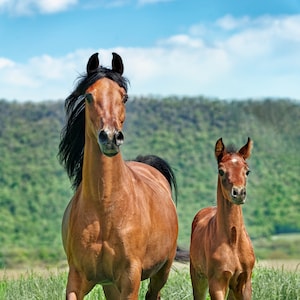
If you've ever stood in a barn aisle while a freshly weaned foal screams himself hoarse and a mare paces a fence line raw, you know weaning has a reputation. It's the single most stressful event in a foal's first year: a sharp spike in cortisol, a real risk of injury from frantic running, and a window where stress drops immunity and ulcers and respiratory bugs sneak in. But the screaming match isn't inevitable. Having watched a great many weanings, we've come to believe the method you choose matters far less than the preparation you do for weeks beforehand.
Timing first. Most farms wean somewhere between four and six months, and the foal needs to be genuinely ready — eating solid feed and forage well, drinking water reliably, and getting most of its nutrition from something other than the mare. By four months, milk is a shrinking fraction of a foal's diet anyway, which is why the dietary side of weaning should be sorted in advance; the foal should already be comfortable on the creep feed and forage program covered under nutrition for the pregnant and lactating mare and its companion foal-feeding guidance, so that losing the milk isn't also a nutritional cliff.
The preparation that does the heavy lifting is independence. A foal that's confident away from its dam weans far more easily than one that's been velcroed to her side. That confidence comes from the handling foundation — the leading, the standing tied, the comfort with people — that you ideally built through early imprinting and handling. A foal that already trusts humans and has spent time a few feet from mom isn't facing two crises at once when the mare leaves.
The methods themselves fall into a few camps. "Abrupt" weaning — mare gone, out of sight and earshot, all at once — is fast and still common, but it's the loudest and the highest-stress, and it's where most weaning injuries happen. "Gradual" or "interval" weaning removes mares from a group a few at a time over a couple of weeks, so foals lose their dams but keep the herd; the remaining mares act as babysitters and the social structure cushions the blow. "Fenceline" weaning separates mare and foal across a safe, foal-proof fence so they can see, smell, and touch but not nurse — the milk supply dries up while the relationship eases apart, and it's the method we recommend for most farms because it's noticeably quieter and the pair usually settle within a few days.
Whatever method you pick, the environment is where you prevent injuries. Wean into a safe, well-fenced space with no wire, no equipment, no corners a panicking foal can run into; solid board or no-climb mesh, gates secured, water buckets nothing can get a foot through. Never wean a single foal alone if you can help it — give it a buddy, ideally another weanling or a calm, foal-safe older "nanny" horse or pony. Company is the best sedative there is. Keep familiar things constant: same feed, same waterers, same general routine, so the only big change is the absence of mom rather than everything at once.
On the mare's side, you want her milk to dry off cleanly. Don't strip or milk her out — that signals her body to keep producing. Cut her grain back for several days before and after weaning so you're not fueling milk production, watch her udder for heat, hard swelling, or obvious discomfort, and call your vet if it looks like mastitis is brewing rather than just a normal full bag that's quieting down. Most mares settle within a few days once the foal is out of earshot and the milk pressure eases.
Then watch the weanling for the secondary problems, because the stress dip is when they appear. Keep a close eye on appetite and manure, watch for any cough or nasal discharge in the first couple of weeks, and don't pile other stressors on top — this is a bad time to also deworm, vaccinate, ship, and brand all in the same week. Spread that work out. A weanling that goes quiet, off its feed, or dull deserves a temperature check and a phone call, not a wait-and-see.
Done thoughtfully, weaning looks almost boring. On a well-managed farm, the foals are fenceline-weaned in small groups into a board-fenced paddock with an old gelding pony as the steadying influence, the mares' grain is dropped ahead of time, and the routine is otherwise left untouched. The foals call for a day, graze with their friends by the third, and the pony naps through all of it. No raw fence lines, no vet calls, no drama. That's the goal — not a method you can name, but a transition so well planned the foal barely notices the one thing that changed.