Bridle fit and styles, decoded
A bridle that fits disappears on the horse's face. A badly fitted one pinches nerves and ruins contact. Here's how to size every piece and pick the style that suits your horse.
Some links in this article are affiliate links; Apex Equine may earn a commission at no extra cost to you.
A well-fitted bridle is invisible — it sits quietly on the head and the horse forgets it's there. A badly fitted one presses on facial nerves, pinches the lips, and gives you contact problems you'll spend months blaming on the horse. Bridle fit gets far less attention than saddle fit and causes more quiet misery than people realize, so let's go piece by piece.
Sizing starts with the whole bridle: pony, cob, full (horse), and oversize/warmblood. Most horses take a cob or full; warmbloods and big-headed drafts need oversize. But the overall size is just the starting point — every piece needs to fit individually, and a good bridle lets you adjust each one. SmartPak's bridle selection lists sizing across brands so you can match your horse's measurements before ordering.
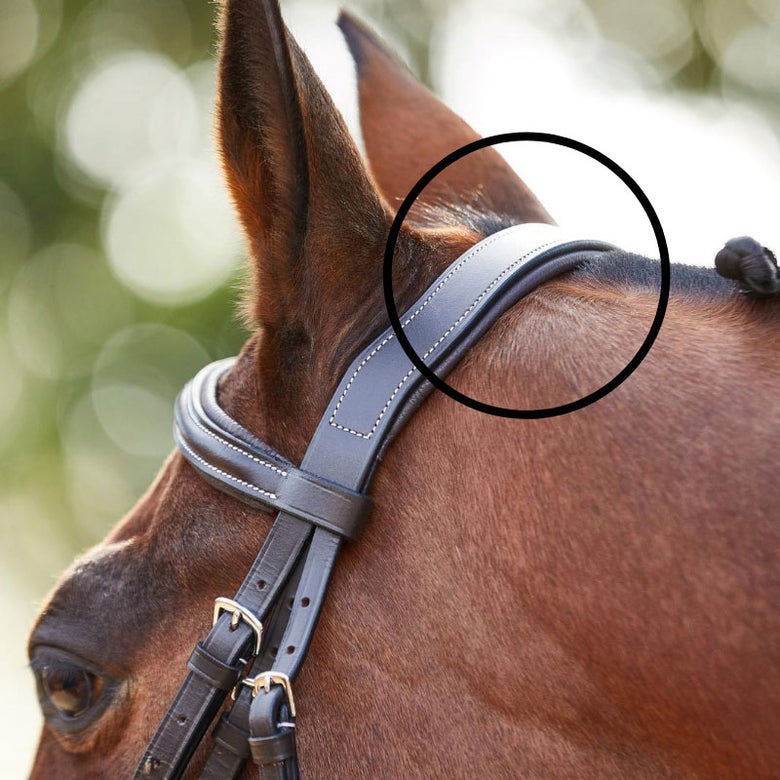
The browband is the piece people get wrong most often. It should sit comfortably below the base of the ears without pulling the crownpiece forward into the back of the ears — a too-short browband pinches there and causes head-tossing, ear-shyness, and a horse who won't accept the bridle. You should be able to fit a finger between the browband and the forehead. If your horse hates having his bridle put on, check this first; an oversize browband often fixes it overnight. Dover stocks browbands separately in their bridle and parts range so you can size up just that piece instead of buying a whole new bridle.
The crownpiece and cheekpieces position the bit. The bit should sit at the corners of the mouth creating one or two soft wrinkles — too low and it bangs the teeth and the horse plays with it, too high and it's pulled up tight and sore. Adjust the cheekpieces evenly on both sides. An anatomical or "comfort" crownpiece, shaped and padded to relieve pressure behind the ears where the sensitive poll sits, is one of the genuinely worthwhile innovations of the last decade; horses who've been head-shy or fussy in the contact often soften noticeably in one. Riding Warehouse carries the anatomical and padded bridles from PS of Sweden, Schockemöhle, and similar makers if you want to try one.
The noseband is where styles diverge. A plain cavesson sits about two fingers below the cheekbone and should be loose enough for two fingers between it and the nose — a noseband cranked tight is both cruel and counterproductive, because a horse who can't move his jaw can't relax it. A flash adds a strap around the muzzle to keep the mouth closed and stabilize the bit; a figure-eight (grackle) crosses over the nose and is popular for jumpers who open their mouths. A drop noseband sits lower for direct action. None of these is a fix for a training problem; they're tools for a specific job. When Hollis fitted his event horse Marcus with a properly loosened figure-eight after years in a too-tight flash, the horse finally stopped grinding his teeth through the dressage test.
The throatlatch is the easy one everyone overtightens: you want a hand's width of room between it and the cheek, enough that the horse can flex at the poll without it choking him. Snug it just enough to keep the bridle from being pulled over the head.
A short fitting routine when a new bridle arrives: check the browband for poll and ear pinching first, set the bit height to one or two wrinkles, adjust the cheekpieces evenly, loosen the noseband to a two-finger fit, and leave the throatlatch generous. Keep the leather conditioned so it stays supple and doesn't crack at the buckle holes; a tin of leather conditioner and a sponge in the cleaning kit keeps a good bridle going for years.
Two pieces of the puzzle sit on either side of the bridle. The bit hangs inside it, and the kindest bridle in the world won't help if the mouthpiece is wrong, so get the bit choice sorted alongside the bridle fit. And the bridle is part of the same fit-first picture as everything else you put on the horse — the same care you take confirming you've chosen an English saddle that fits belongs on his face too. A bridle the horse forgets he's wearing is the whole goal.