Foaling complications: when minutes matter
Most mares foal cleanly in twenty minutes. The rare ones that don't can lose a foal or themselves in the time it takes to second-guess yourself. Know the few that can't wait.
Foaling is fast, and that speed cuts both ways. A normal mare delivers in about twenty minutes of hard, active labor, which is wonderful when everything's lined up correctly and terrifying when it isn't, because the same clock that gives you a quick, clean foal gives you almost no margin when something is wrong. We've watched dozens of textbook foalings and a handful of true emergencies, and the difference in outcome almost always came down to whether someone on the scene recognized trouble in the first few minutes instead of the tenth. So this is the short list of complications that genuinely can't wait — the ones where you call the vet while you're still walking to the stall.
Red bag is the one every foaling attendant must know on sight. In a normal delivery you see the pale, white-to-blue amnion appear first. In a "red bag" — premature placental separation — what presents at the vulva is a thick, red, velvety membrane instead. That means the placenta has detached and the foal is no longer getting oxygen; it is suffocating in real time. This is the one emergency where you don't wait for the vet to start: you cut or tear open that red membrane immediately, find the foal inside, and help deliver it fast, then get veterinary help for the foal that's likely been oxygen-deprived. Every foaling kit should have clean, blunt-tipped scissors for exactly this, and every person on foal watch should know what red looks like versus white.
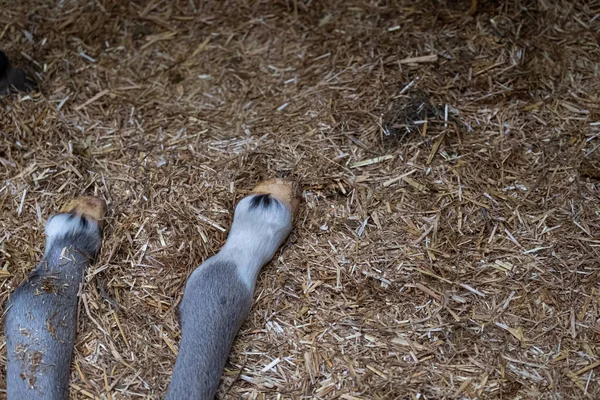
Dystocia — malpresentation — is the next category. The normal presentation is the "diver's position": two front feet, soles down, with the nose resting just behind the fetlocks. Anything else is trouble. One foot and a nose, or no nose, suggests a leg back at the elbow or carpus. Feet pointing soles-up means the foal is upside down or coming backwards. A nose with no feet, or a tail and hocks first (true breech), are serious malpositions. Because the mare's contractions are so powerful and fast, a malpositioned foal can wedge in minutes. If after the water breaks you don't see a normal nose-on-two-front-feet picture, or you see hard straining for fifteen to twenty minutes with no progress, that's an emergency call — and do not start pulling on whatever you can reach, because correcting a malposition usually requires repelling the foal back in, which only a vet should attempt.
Then there are the post-delivery emergencies that kill mares rather than foals. A retained placenta — anything still attached more than three hours after foaling — is genuinely dangerous: it can cascade into metritis, endotoxemia, and life-threatening laminitis within a day. Never pull it out; tie it up out of the way, save it, and get the vet. Hemorrhage is the other quiet killer, especially in older mares: a ruptured uterine artery can bleed into the broad ligament or abdomen with few outward signs beyond a mare who becomes suddenly weak, pale-gummed, sweaty, colicky, or down after an apparently normal foaling. That mare needs a vet now and as little movement and stimulation as possible. A uterine or vaginal tear and a uterine prolapse (the uterus turning inside out, an obvious and frightening emergency) round out the list — all immediate calls.
On the foal's side, the first-day failures are their own emergencies even after a clean delivery. A foal that doesn't follow the 1-2-3 of the first 24 hours of a foal's life — not standing by an hour, not nursing by two — is a foal in trouble, whether from weakness, prematurity, or neonatal maladjustment ("dummy foal"). A meconium impaction, the colt straining and rolling with no first manure, needs an enema and sometimes more. And failure of passive transfer, the foal who didn't get enough colostrum in time, is a slow-motion emergency that an IgG test catches before the foal crashes on day three.
The single best thing you can do about all of this is prepare before her water ever breaks. Everything in reading the foaling signs and prepping the kit — the staged supplies, the clean foaling stall, the scissors for a red bag, the vet's after-hours number written on the bucket lid — exists precisely so that when the rare bad night comes you're acting, not gathering. Decide your "go now" trigger in advance, have your trailer ready and the route to the nearest equine hospital clear, and know the broader rules for when to call the vet in an emergency cold.
We don't tell people this to make them afraid of foaling. The overwhelming majority of mares need nothing from us but a quiet stall and someone watching the clock. But the small minority that go wrong, go wrong in minutes, and they don't care that it's two in the morning. Learn the few pictures that mean stop and call — red instead of white, no normal diver's position, no placenta by three hours, a mare suddenly weak after foaling — and you'll be the person who got help while there was still time to use it.