Five groundwork exercises that make everything under saddle easier
The horse who stands, yields, backs, and leads politely on the ground is the horse who's quiet under saddle. Here are the five exercises worth drilling before anyone ever sits on a youngster.
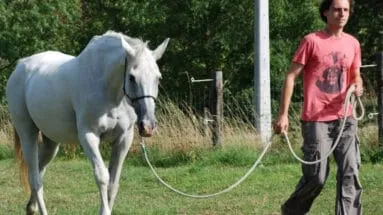
When a green three-year-old comes into training, a careful starter won't get on for weeks. People find that strange until they watch the difference between a colt who's had real groundwork and one who hasn't. The first one stands like a gentleman at the block and gives to pressure; the second one is a wrestling match in the cross-ties. Almost every problem riders blame on a horse "being bad" under saddle traces back to a hole on the ground.
Groundwork is where the horse learns the grammar of pressure and release — that yielding to a feel makes the feel go away. Master that on the ground and you've taught him how to learn from your leg, your rein, and your seat before you ever apply them. Here are the five we'd never skip, in a sensible order to teach them.
1. Standing still on a loose lead. Park the horse and ask him to plant his feet while you walk a circle around him, swing the lead, even step away. Every time he moves, quietly put him back on the exact spot. A horse who can stand is a horse who can wait, and waiting is half of safety.
2. Yielding the hindquarters. Standing at the shoulder, look at his hip and apply light pressure toward it until he steps his inside hind under and across, then release the instant he tries. This installs the disengagement you'll later use to stop a bolt or rebalance a canter.
3. Yielding the forehand. Apply pressure at the shoulder so he steps his front end away from you, crossing one front leg over the other. Front and back yields together give you a horse who moves any part of his body off a suggestion.
4. Backing softly. Wiggle the lead or apply light chest pressure and ask for two or three straight steps back, building until he backs off a mere lift of your hand. A horse who backs willingly respects your space and rocks his weight onto his hocks, which pays off in every downward transition.
5. Leading with transitions. Walk, halt, and walk again with the horse matching you stride for stride, neither dragging nor running you over. Throw in turns and changes of pace until he's glued to your shoulder.
Drill each one in short sessions, ten or fifteen focused minutes, and always end on a try rather than a fight. A young horse's attention span is shorter than you think, and the worst thing you can do is grind an exercise until he sours on it.
These five feed directly into the next stage of training. Once the horse leads and yields reliably in hand, he's ready to learn to work at a distance, which is exactly the foundation teaching a horse to lunge builds on. And the horse who's learned to think through pressure instead of bracing against it is far easier to bring along when something genuinely scares him, which is why solid groundwork is the first chapter of working with a spooky horse. Do the boring ground hours now and you buy yourself a saddle horse who already knows how to listen.