Dressage for people who think dressage isn't for them
You don't need a fancy warmblood, white breeches, or a dream of the Olympics. Dressage is just systematic flatwork that makes any horse, in any discipline, better.
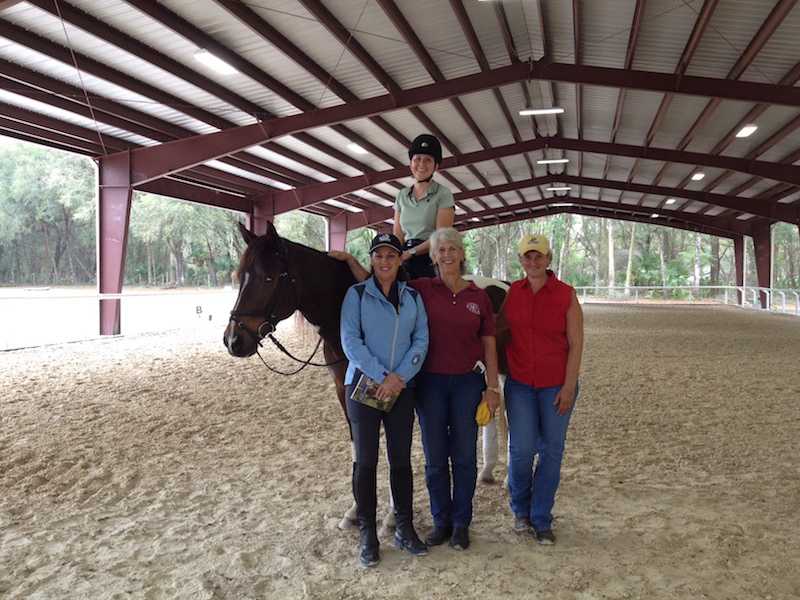
The word "dressage" makes a lot of riders flinch. They picture top hats, six-figure warmbloods, and movements that look like the horse is dancing on hot coals. So they decide dressage isn't for them — they trail ride, they jump, they barrel race — and they miss the fact that dressage is simply training. The French word means exactly that. Every discipline that puts a saddle on a horse benefits from a horse who's supple, balanced, responsive, and forward, which is all dressage is really trying to build.
We'd tell any eventing or trail rider the same thing: you're already doing dressage, you're just doing it without a plan. A horse who bends softly around your leg, comes back to you off your seat, and carries himself instead of leaning on your hands is a safer, more pleasant ride whether you're navigating a cross-country course or a rocky trail. The training scale that dressage organizes everything around — rhythm, suppleness, contact, impulsion, straightness, and finally collection — is just a sensible order in which to build a using horse.
Start with rhythm and relaxation, the bottom of that scale, because nothing else works if the horse is tense or uneven in his gaits. A regular, unhurried walk, trot, and canter where the horse is swinging through his back and breathing is the foundation. Most of what looks like advanced riding is really just a horse who's genuinely relaxed and a rider who isn't interfering. This is where your own position does the heavy lifting, and why the seat work in your first balanced canter matters as much in a dressage court as anywhere.
The everyday tools are simpler than they look. Transitions are the gym of dressage — walk to trot, trot to walk, and eventually walk to canter, ridden crisply off your seat and leg rather than your hands, teach the horse to carry weight behind and lighten his front end. Circles and changes of bend supple him side to side. Leg-yield, the first lateral movement most riders learn, asks the horse to move forward and sideways off your leg and unlocks his whole body. None of it requires a special horse; a sound Quarter Horse or a sensible cob can do solid lower-level work and be the better for it.
You don't need much to start. A snaffle bridle, a saddle that fits, an arena or even a level field you can mark out, and ideally a coach with a good eye. What dressage does demand is honesty, because it's measured. The discipline's great gift to amateurs is its feedback loop: you ride a test, a judge scores every movement, and you get a written road map of exactly what to improve. That structure is why so many riders who try it get hooked, and it's worth understanding before your first outing — how dressage tests and scoring work explains what those numbers and comments actually mean.
It's worth saying what dressage is not, because the myths scare people off. It is not making a horse go slow and "headset" by cranking his nose to his chest — that's a tense, hollow horse faking a frame, and any good judge marks it down hard. True roundness comes from the hind end pushing the horse up into a soft contact, never from the hands pulling the front end in. If your training is making your horse tense, fussy in the mouth, or sour, you've wandered off the path, not advanced down it.
Give it a season before you judge it. The rider who commits to even basic dressage for a few months almost always reports the same thing: their horse feels lighter, steers better, stops more softly, and is simply more fun across every other thing they do with him. You don't have to love the white breeches. You just have to want a better-trained horse, and that's something every rider wants.