Finding your first balanced canter
The first canter feels fast and unbalanced because your seat hasn't learned the motion yet. Here's how to set it up so the gait helps you instead of throwing you around.
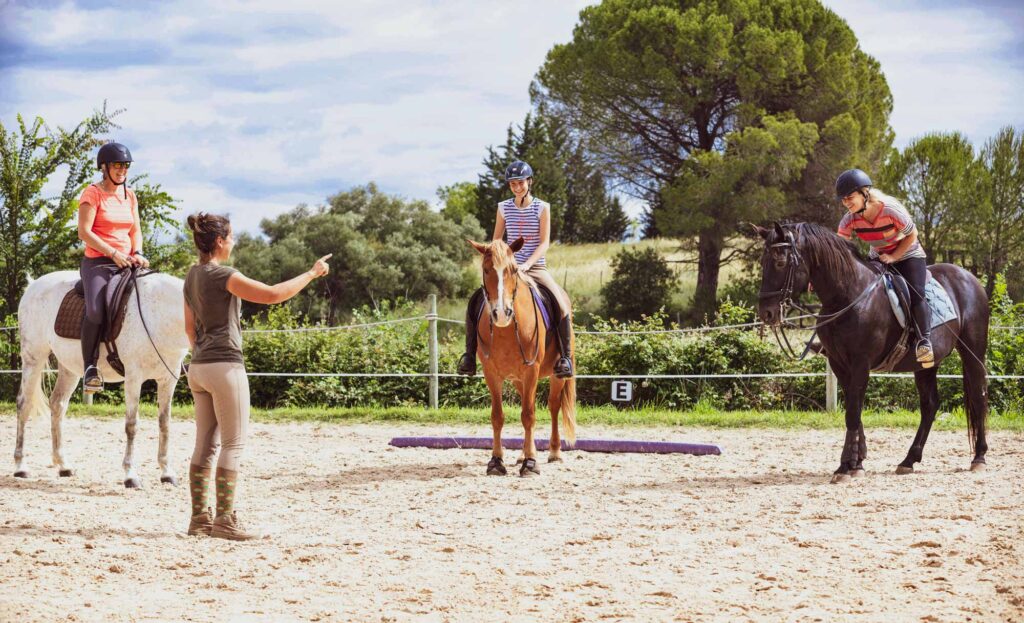
Almost every rider remembers their first canter as faster and scarier than it really was. The horse picks up the gait, your seat hasn't learned the rolling motion yet, you grab the reins for balance, and the whole thing feels like a runaway when in truth you covered maybe thirty meters. The canter isn't actually fast. It just exposes every gap in your position the moment the rhythm changes from the trot's bounce to the canter's three-beat rock.
Before you ask for canter, you need an honest trot. That means a posting and sitting trot you can maintain in balance without using the reins to hold yourself up, because the second you need your hands for balance, you'll catch the horse in the mouth on the upward transition and teach him that canter equals a yank. Everything good about the canter is built on the seat, leg, and hand fundamentals, and if those aren't solid at walk and trot, they will fall apart entirely at canter. Spend the extra weeks. It's worth it.
Set the transition up to succeed. A balanced first canter comes more easily out of a corner or onto a circle, where the bend naturally encourages the horse to strike off on the correct inside lead, than down a long straight side where a green horse may just trot faster and faster. On a quiet school horse, ride a forward, balanced trot into the short side, sit a few strides, and ask in the corner. Your aid is a coordinated whisper: weight your inside seat bone, keep your inside leg at the girth for energy, slide your outside leg slightly behind the girth to ask for the strike-off, and allow with your hands so the horse can jump up into the gait rather than getting trapped.
Then the hard part: let your seat follow. The instinct is to brace and grip, which locks your hips and makes you bounce. Instead, let your hips roll forward and back with the motion as if you're polishing the saddle, keep your shoulders tall, and breathe out. Hold a neck strap or a chunk of mane with your outside hand the first several times so you can keep your rein hand soft no matter what your balance does. A canter you can sit is a canter you've stopped fighting.
When it goes wrong, it's almost always predictable. If the horse just trots faster, you're probably leaning forward and gripping, which drives him onto his forehand — sit up, slow your posting, and re-balance the trot before asking again. If he picks up the wrong lead, your aids weren't clear or you asked on a straightaway; come back to trot, rebalance, and set it up on a circle. If you feel yourself tipping forward, fix your eyes on something across the arena and grow tall; looking down is what pitches you onto the horse's neck.
Keep early canters short. A half-circle of balanced canter that you sit well is worth ten laps of hanging on for dear life, and ending while it's still good keeps both you and the horse confident. Breathing matters more than people expect here too — riders hold their breath the instant the canter starts, which tightens everything; counting the three-beat rhythm out loud, "one-two-three, one-two-three," keeps you exhaling and keeps your hips loose.
As your seat learns the motion, you'll start to feel the canter as a comfortable rocking-horse rhythm rather than a scramble, and that's when real riding opens up. It's also the gateway to more refined flatwork: the rider who can ride a balanced, adjustable canter on both leads is exactly the rider ready to explore dressage for beginners, where transitions and balance become the entire conversation.