Reading a dressage test and what the judge is rewarding
A dressage score sheet looks like a wall of numbers and shorthand. Once you can read it, it becomes the most useful training tool you own.
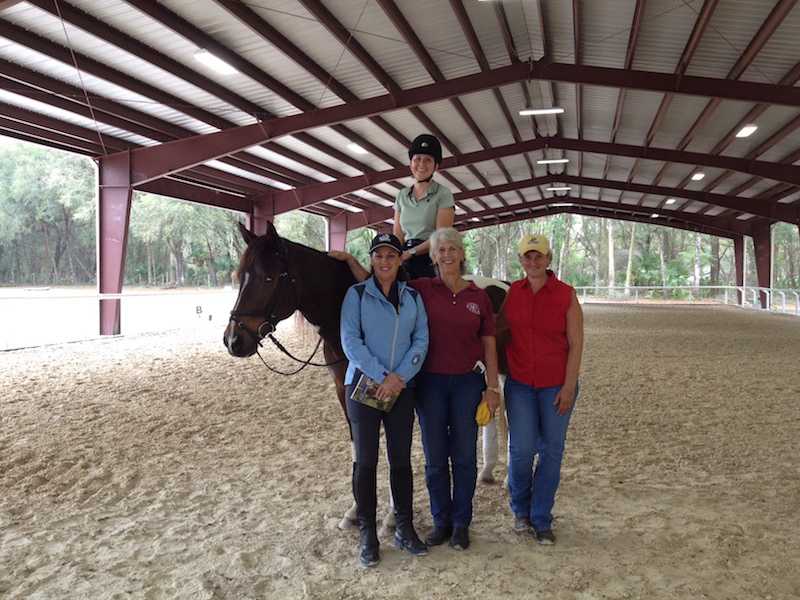
A rider we'll call Priya came back from her first Training Level test convinced she'd been robbed. She'd ridden, in her words, a clean test, and scored a 62%. Read through the sheet, though, and the picture was completely different: a column of 6s and 6.5s with one 4 for a botched canter transition, and a note in the judge's hand reading "needs more bend through the corners." She hadn't been robbed. She'd ridden an accurate test on a horse that wasn't yet through and supple, and the sheet told her exactly that. Learning to read it changed how she trained.
A dressage test is a prescribed series of movements ridden in a lettered arena, each movement scored from 0 to 10 by a judge sitting at C. The letters around the ring — A, K, E, H, C, M, B, F — mark where each movement begins and ends, and accuracy at those markers is part of the score. The percentage you take home is simply the total points earned divided by the points possible, so a 65% means the horse and rider averaged roughly a "satisfactory" 6.5 across the test. The scale is generous-sounding but humbling in practice: a 6 is "satisfactory," a 7 is "fairly good," and most amateurs live happily in the 60s.
What the judge is actually rewarding is described by the training scale, the framework that underlies the entire sport: rhythm, suppleness, contact, impulsion, straightness, and collection, built roughly in that order. At the lower levels nobody expects collection — the judge wants to see a horse moving in a clear, regular rhythm, soft and swinging through the back, accepting a steady contact, and tracking up with energy. Priya's 4 on the canter transition wasn't about the canter itself; it was that the horse braced and lost his rhythm, which is a rhythm-and-contact failure, the very foundation.
The collective marks at the bottom of the sheet are where the judge sums up the whole picture, and they're the most useful thing on the page. Gaits, impulsion, submission, and rider position each get their own score and often a sentence of feedback. Read those comments before you read the movement scores, because they tell you the theme — "tension in the back," "needs more activity behind," "rider's hands unsteady." Fix the theme and a dozen movement scores rise together.
This is why we treat the score sheet as a training plan rather than a verdict. The single comment that appears most often across your last three tests is your homework, full stop. If "behind the vertical" keeps showing up, the horse isn't reaching for the contact and you've got a connection problem to solve at home. If "fell in on the circle" repeats, you're not riding the corners with enough inside leg. The judge has just given you a paid lesson; the only waste is filing the sheet away unread.
A few practical things help you ride a better test once you understand the scoring. Ride deep into your corners — they're free preparation and a place to rebalance, and judges notice when you use them. Make your transitions exactly at the marker, not three strides early because you got anxious, since accuracy is genuinely worth points. And ride every movement to its end; the canter doesn't stop being judged until the next letter. Small precision adds up across twenty movements.
If dressage feels intimidating from the outside, it shouldn't, and it's worth demystifying before you ever enter — the gentler on-ramp in dressage for people who think dressage isn't for them is where we point nervous beginners first. When you're ready to actually compete, choose your first tests deliberately rather than jumping in too high; the approach in picking the right shows for your level applies to recognized dressage every bit as much as to jumpers.
Memorize your test cold, but bring a reader for your first few outings anyway — a blown pattern costs two points and a lot of confidence. Then go home, read the sheet, find your most-repeated comment, and put it at the top of next week's training list. A dressage score isn't a grade. It's a map.